Visual Fatigue and Mental Burnout: How Eye Strain Drains Cognitive Energy
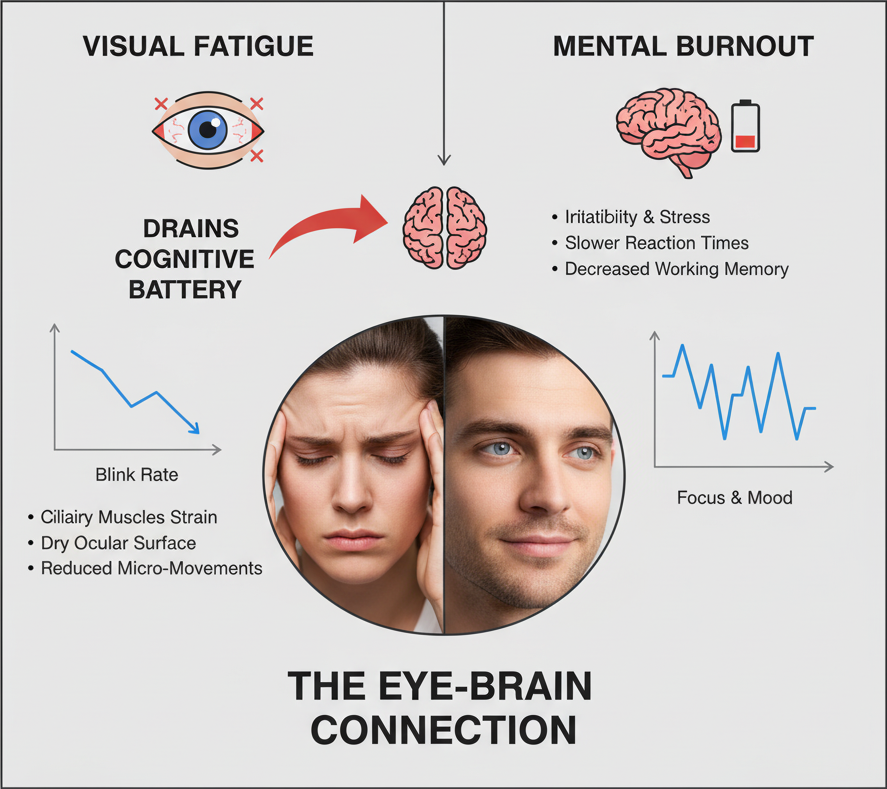
You've probably felt it — the subtle decline after hours at the screen. Your vision blurs slightly, your mind slows, and simple tasks start to feel heavier. That's not just mental fatigue; that's visual fatigue draining your cognitive battery.
In a world where focus is currency, losing energy to eye strain is a hidden tax you can't afford.
The Eye–Brain Connection: Why Fatigue Feels Like Burnout
Your eyes aren't just cameras. They're extensions of your brain, connected through the optic nerve and responsible for processing over 80% of all sensory input. Every flicker, every line of text, every notification costs a bit of neural energy.
When your eyes stay locked on a near object for hours:
- •The ciliary muscles that control focus never relax.
- •Blink rate drops by more than 60%, drying the ocular surface.
- •Micro-eye movements decrease, starving your visual cortex of refresh signals.
The brain perceives this as stress — releasing cortisol, narrowing attention, and amplifying fatigue. Over time, this loop blurs the line between eye strain and mental burnout.
Eye fatigue isn't just about comfort — it's about protecting your brain's ability to think clearly.
What the Science Says
🧠Vision and Cognition Are Biochemically Linked
Journal of Vision Science (2024): Sustained near focus for 90+ minutes increases mental fatigue scores by 37%, even when physical energy remains stable.
Stanford Neuroscience Lab (2023): Reduced blinking and dry eye correlate with slower reaction times and decreased working-memory performance.
Ophthalmology Reports: Over 70% of patients with chronic eye strain also exhibit cognitive symptoms like irritability, forgetfulness, and trouble concentrating.
💡Why "Tired Eyes" = "Tired Mind"
When the eyes strain, the brain diverts resources to maintain visual clarity, leaving less energy for executive function — planning, decision-making, and creativity. It's the mental equivalent of running background apps that drain your battery.
The Hidden Costs of Ignoring Visual Fatigue
| Impact Area | Short-Term Effect | Long-Term Consequence |
|---|---|---|
| Focus | Decreased attention after 30–45 min of continuous work | Chronic difficulty sustaining deep work |
| Mood | Irritability, impatience, frustration | Emotional burnout and reduced motivation |
| Performance | Slower task completion, more errors | Consistent productivity decline |
| Health | Headaches, eye pain, blurred vision | Potential for chronic dry eye and insomnia |
University of Birmingham Study: Employees with unmanaged visual strain lost 10–20% of their productivity — the same as taking an extra day off every week.
Breaks That Protect Both Eyes and Mind
Regular visual recovery breaks — even 20 seconds every 20 minutes — can dramatically reduce neural fatigue.
When your eyes rest, so does your prefrontal cortex, the part of the brain responsible for focus, planning, and self-control.
But knowing that and doing it are two very different things.
How Vision Guard Turns Science Into a Habit
Vision Guard for macOS helps you actually follow what the research recommends — without timers, sticky notes, or guilt.
👁Automated Eye Recovery
- • Smart 20-20-20 and Pomodoro reminders adapt to your workflow
- • Gentle overlays guide your eyes away from the screen
- • No interruptions, just natural pauses
🧘Mindful Micro-Breaks
- • Guided visual relaxations during short breaks
- • Simple breathing exercises included
- • Restore comfort and clarity in under 60 seconds
📈Focus Analytics That Motivate
- • Weekly insights on comfort and productivity
- • Track your focus patterns and streaks
- • See real, measurable progress
⚙️Smart Detection
- • Pauses automatically during meetings and video calls
- • Detects full-screen apps
- • You stay in flow — your health stays protected
The Compounding Benefit: Eye Care = Cognitive Care
After a week of consistent use, most users report:
Because protecting your eyes isn't just self-care — it's mental performance insurance.
Final Thought
Every hour you spend staring at a screen is a small withdrawal from your brain's focus bank. The only way to stay sustainable is to reinvest through recovery.
Vision Guard automates that process — protecting your focus, your eyes, and your productivity.
Don't wait until burnout blurs your vision.
Vision Guard automates recovery breaks that protect both your eyes and your mind.
Start protecting your focus today.